
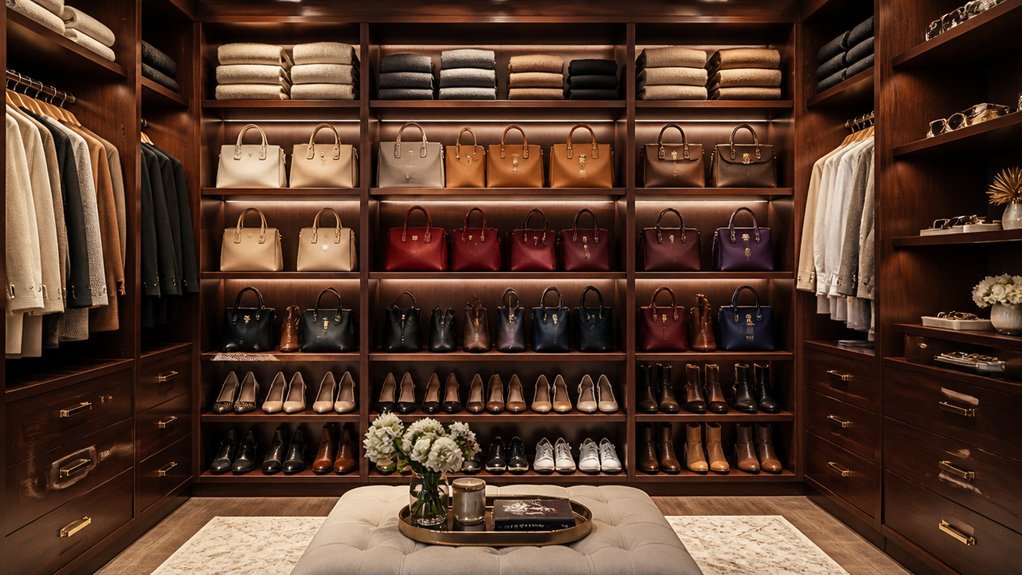
Creating an organized wardrobe starts with choosing shelving that actually works for your lifestyle. Floating shelves bring a clean, modern look while keeping everyday items within easy reach.
Built-in units, on the other hand, make use of every awkward corner and can be tailored to fit sloped ceilings or alcoves perfectly.
Vertical shoe displays deserve more attention than they typically get. Tilting shelves or pull-out racks transform cluttered piles into accessible showcases, protecting footwear while doubling as visual interest.
For accessories, shallow drawers with dividers or small cubbies prevent tangles and lost pieces.
The finishing touches matter just as much as the structure itself. Warm task lighting eliminates shadows in deep cabinets, making morning routines smoother.
Grouping items by color or occasion creates intuitive flow, while consistent folding techniques maximize every inch of shelf depth.
What works beautifully in one home might feel cramped in another, so measuring twice and living with temporary setups first often reveals the best long-term solution.
Choose Your Shelving Style: Floating, Built-In, or Hybrid
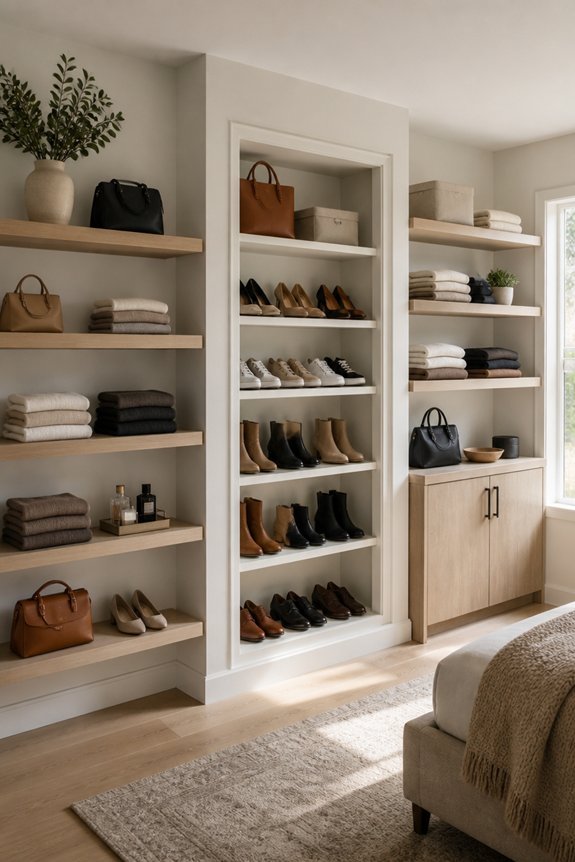
How does one decide between the three main shelving options for a wardrobe? Floating shelves mount directly to walls, requiring no visible support structure, and work well for displaying folded clothes, shoes, and accessories. Built-in shelves, constructed within wall cavities or cabinets, offer permanent storage solutions and maximize space efficiency.
Hybrid systems combine floating shelves with cabinet bases, providing both open display areas and concealed storage compartments. Each option presents distinct advantages regarding installation difficulty, weight capacity, and aesthetic appeal. Floating shelves suit renters, built-in shelves serve permanent installations, and hybrid designs accommodate mixed storage needs, accommodating various wardrobe organization preferences.
Measure Your Space: Shelf Depth and Height Essentials
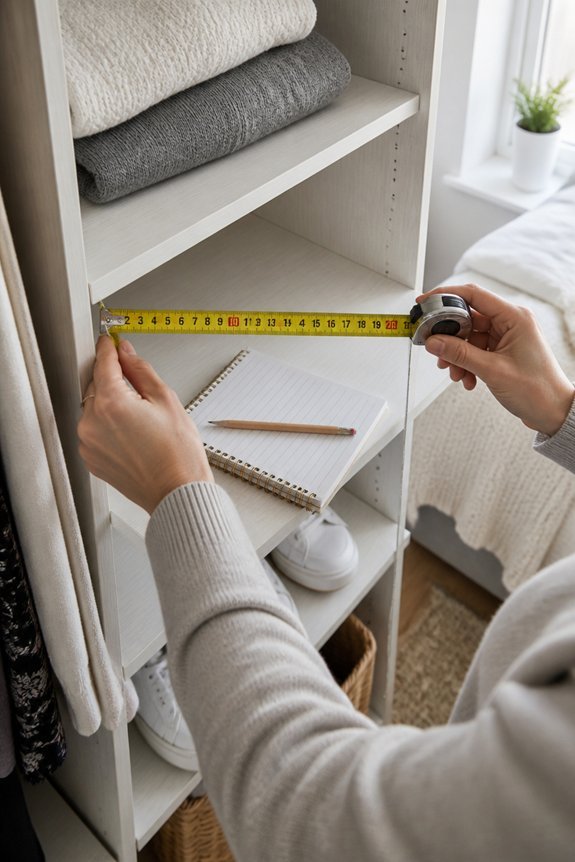
Before purchasing or installing wardrobe shelves, precise measurements of wall space determine whether shelves will function properly and hold clothing items securely.
Standard shelf depth ranges from 10 to 16 inches, accommodating folded shirts, sweaters, and accessories. Height spacing between shelves typically measures 10 to 14 inches, allowing adequate room for stacked items without compression.
Measure vertical wall space in multiple locations, accounting for uneven surfaces or baseboards. Note doorway clearance and obstructions like outlets or windows. Document all measurements in writing.
Standard shelf widths span 24 to 48 inches. Accurate measurements prevent installation errors, wasted materials, and structural failures. Proper dimensions optimize storage capacity and clothing preservation.
Fold and Organize Clothes on Your Shelves
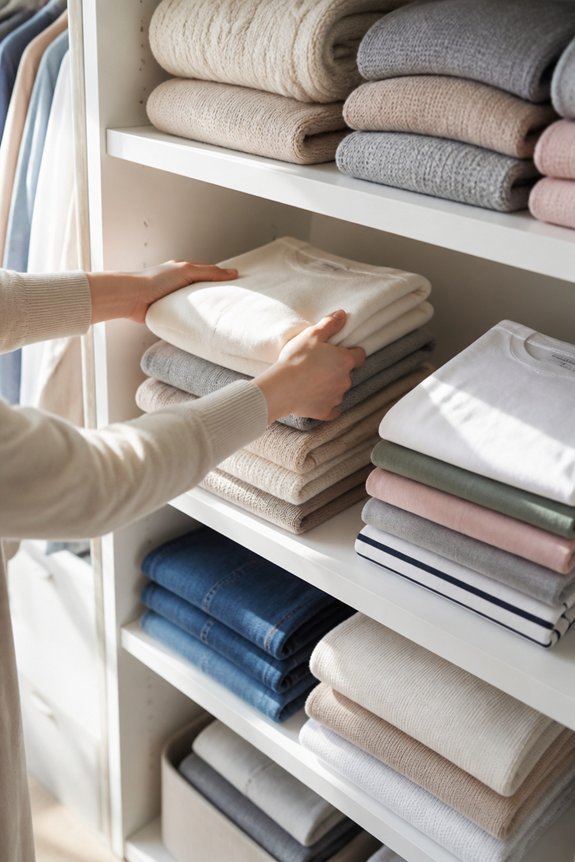
Maximizing shelf space requires strategic folding techniques and organizational systems that keep garments visible, accessible, and well-preserved. The KonMari method involves folding clothes vertically so items stand upright, allowing easy identification without disturbing others. Rolling garments works well for casual items like t-shirts and sweaters, reducing wrinkles and maximizing density.
Grouping by category, shirts, pants, sweaters, creates logical organization. Using shelf dividers prevents stacks from toppling. Placing heavier items on lower shelves maintains stability. Drawer organizers and fabric bins contain smaller pieces.
This approach prevents repeated folding damage while maintaining efficient storage capacity throughout the wardrobe shelving system.
Maximize Shoe Storage With Vertical Shelving
Vertical shoe shelving offers an efficient alternative to traditional floor storage, building upon the organizational principles applied to folded garments. Wall-mounted shelves accommodate sneakers, heels, flats, and boots without consuming floor space. Adjustable shelving units allow customization for varying shoe heights and depths.
Storing shoes at eye level simplifies selection and retrieval during daily routines. Clear shoe boxes or wire baskets prevent dust accumulation while maintaining visibility of contents. Grouping similar styles together, such as athletic shoes on one shelf and formal footwear on another, streamlines the selection process. This vertical approach maximizes closet capacity considerably.
Display and Arrange Your Accessories
Once shoes are organized vertically, accessories require similar strategic placement to maintain an efficient wardrobe system. Drawer dividers work well for scarves, belts, and jewelry, keeping items separated and visible. Wall-mounted pegboards accommodate hats, sunglasses, and bags effectively. Shelf organizers with small compartments store rings, bracelets, and watches without tangling.
Hooks on closet doors hold necklaces and scarves, preventing wrinkles and damage. Clear containers display seasonal accessories while protecting them from dust. Rotating frequently used items to eye level improves daily access. Regular inventory checks prevent duplicate purchases and identify missing pieces, maintaining wardrobe cohesion and functionality throughout seasons.
Create Visual Order With Color and Grouping
Organizing clothing by color and category transforms a closet into a functional, visually coherent space. Grouping items by type, shirts, pants, dresses, simplifies locating specific pieces. Arranging clothes by color creates visual flow and makes outfit combinations apparent.
Common color arrangements include neutrals together, then warm tones, cool tones, and brights. Accessories benefit from similar organization: group belts by color, arrange shoes by category and shade, and cluster jewelry by type. Shelves work well for folded items, sweaters, and accessories.
This method reduces decision fatigue, prevents duplicate purchases, and maintains order over time through consistent placement habits.
Add Task Lighting to See Everything Clearly
While organizing by color and category creates visual order, proper lighting makes that organization actually visible and usable. Task lighting, such as LED strip lights or small spotlights, should be installed inside shelving units, closet rods, and drawer areas. These lights eliminate shadows, making it easier to locate specific items quickly.
Placement matters. Install lights at the top of shelves or along edges where darkness typically pools. Adjustable brightness levels help users see different fabric textures and shades accurately. Battery-operated options work well for rental spaces, while wired fixtures provide permanent solutions. Proper illumination transforms an organized wardrobe into a functional system.
Frequently Asked Questions
How Often Should I Reorganize and Declutter My Wardrobe Shelving System?
One should reorganize wardrobe shelving quarterly to maintain order and assess clothing needs. Decluttering seasonally allows individuals to remove unworn items, prevent accumulation, and refresh their storage system. Regular maintenance guarantees the shelving system remains functional and visually appealing.
What Weight Capacity Do Different Shelf Materials Support for Heavy Items?
Shelf weight capacity is the backbone of storage organization. Wood supports 25-50 pounds per shelf, metal handles 50-100 pounds, and glass manages 25-40 pounds. Heavy items like shoes require sturdy metal or reinforced wood shelving to prevent collapse and wardrobe damage.
How Can I Prevent Dust Accumulation on Displayed Clothes and Accessories?
One can minimize dust accumulation by using glass-fronted cabinets or acrylic display boxes that fully enclose items. Alternatively, lightweight fabric dust covers or breathable storage bags work effectively. Regular gentle vacuuming with soft brush attachments maintains cleanliness without damaging delicate garments.
What’s the Best Way to Store Delicate Fabrics Without Causing Damage?
Delicate fabrics require acid-free tissue paper layering and breathable cotton storage containers. One should avoid plastic bags, which trap moisture and cause deterioration. Shelving in climate-controlled areas away from direct sunlight guarantees ideal preservation of fragile materials.
Should I Use Shelf Dividers or Boxes to Keep Items Separated?
Both shelf dividers and boxes effectively organize clothing items. Dividers work well for lightweight garments, while boxes provide superior protection for delicate fabrics and accessories. The choice depends on one’s storage needs, available space, and preference for accessibility versus maximum protection.
Conclusion
A well-arranged wardrobe represents an investment in personal organization and daily convenience. By selecting appropriate shelving options, measuring carefully, and implementing storage solutions, individuals create a system that accommodates clothing, footwear, and accessories efficiently. Thoughtful arrangement through color coordination, vertical placement, and adequate lighting facilitates quick item location. This structured approach to wardrobe management transforms storage spaces into functional environments where garments remain accessible and maintained.