
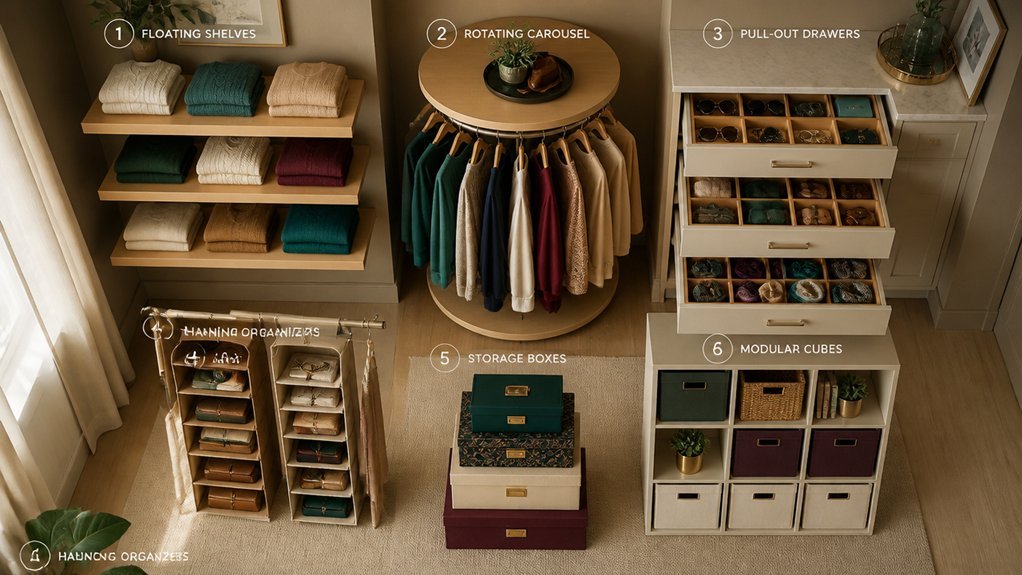
Closet space has a way of shrinking just as wardrobes grow. Most people find themselves staring at overflowing drawers and jammed rods, wondering where everything went wrong.
The right tools can transform even the tightest corners. Slim velvet hangers grip clothes without adding bulk, while double-hanging rods instantly double your vertical real estate.
Freestanding racks and tall shelving units pull storage outward into bedrooms and hallways.
Small adjustments often yield surprising results. Bed risers lift frames just enough to slide bins underneath, and over-the-door organizers turn forgotten surfaces into prime real estate.
Simple hooks mounted on walls or inside doors catch bags, belts, and tomorrow’s outfit.
Not every solution suits every space. The trick lies in matching your specific constraints with strategies that actually fit your habits and your home’s architecture.
Slim Velvet Hangers That Double Your Hanging Capacity
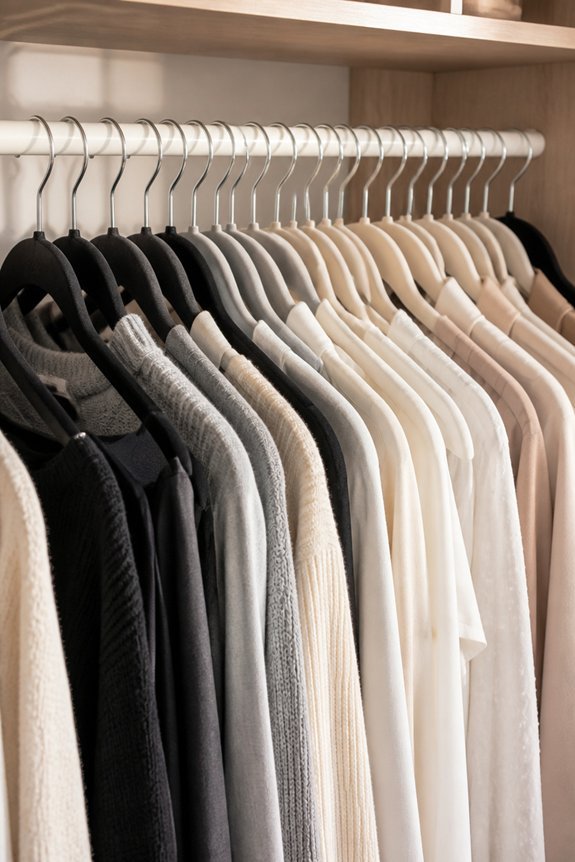
Closet space becomes limited quickly, especially when multiple people share the same wardrobe area. Slim velvet hangers offer a practical solution by reducing the width each garment occupies on the rod.
Traditional plastic or wooden hangers take up considerable space, while velvet hangers measure approximately half an inch thick. This narrower profile allows users to fit nearly double the clothing quantity in the same hanging area.
The velvet material grips fabric surfaces, preventing garments from slipping or shifting on the hanger. Shirts, pants, dresses, and jackets all remain secure and organized.
Installing velvet hangers requires minimal effort. Simply replacing existing hangers with the slim alternatives accomplishes the storage expansion without renovating the closet structure itself.
Double-Hanging Closet Rods to Maximize Vertical Space
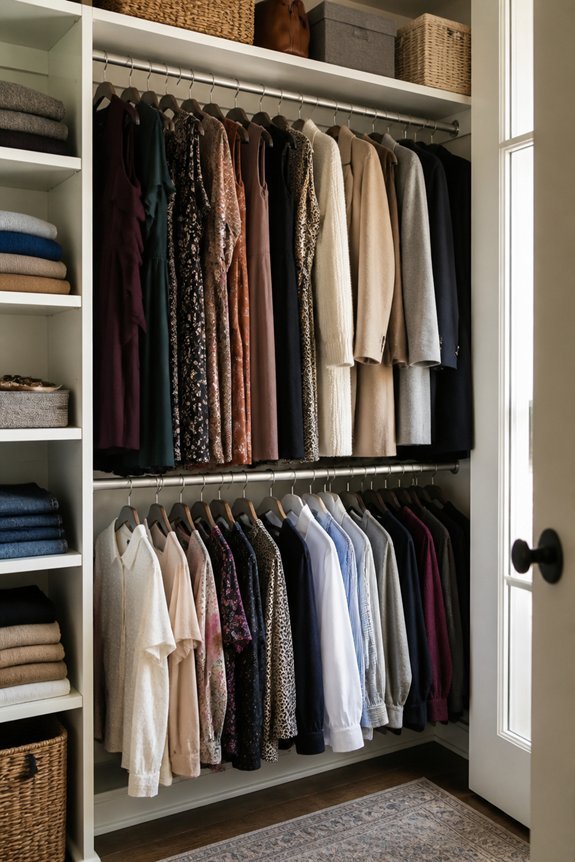
While slim velvet hangers address horizontal space constraints, vertical space offers another significant storage opportunity. Double-hanging closet rods install one rod above another, effectively doubling available hanging capacity within existing footprint.
This system works best for shorter garments, including shirts, blouses, jackets, and folded pants. Installation requires minimal tools and hardware, though professional installation remains available. Adjustable double-hanging systems allow customization of rod heights, accommodating various clothing lengths.
The approach separates seasonal items or clothing categories across rods, improving organization and accessibility. Typical installations cost between fifty and two hundred dollars, depending on materials and closet size.
Freestanding Garment Racks for Seasonal Overflow
Seasonal clothing accumulation creates storage challenges that fixed closet systems cannot always accommodate. Freestanding garment racks offer flexible solutions for storing winter coats, summer dresses, and adaptable pieces.
These racks come in various styles, including metal frames with rolling wheels and wooden designs. They work well in bedrooms, home offices, or spare rooms.
Rolling racks provide mobility for easy access and rearrangement. Non-rolling models offer stability for heavier garments. Typical dimensions range from four to six feet tall, holding twenty to forty items.
Garment racks cost between thirty and one hundred fifty dollars, depending on construction quality and materials used.
Vertical Closet Shelving to Reclaim Wall Space
Installing shelves above existing closet rods maximizes vertical space that typically remains unused. Wire shelving, wooden shelves, and adjustable cube organizers work well for this purpose. These additions create storage for folded sweaters, seasonal items, and accessories without requiring floor space.
Shelves should be installed securely into wall studs or use appropriate anchors to handle weight safely. Labeling each shelf helps locate items quickly. Clear plastic bins on shelves contain smaller pieces while maintaining visibility.
This approach transforms wasted overhead areas into functional storage, enabling closets to hold more clothing and supplies efficiently.
Tiered Shelving Units for Small Bedroom Corners
Many small bedrooms contain unused corner space that remains difficult to access with standard furniture. Tiered shelving units fit into these awkward areas effectively, creating storage without consuming floor space. These units feature multiple levels, allowing items to stack vertically along the wall.
Corner shelves work well for folded sweaters, accessories, shoes, and seasonal clothing. Installing tiered units requires minimal tools and wall anchors. The shelves accommodate various widths, fitting snugly between walls. This solution maximizes storage capacity in compact bedrooms, keeping clothing organized and visible while maintaining easy access throughout the room.
Stackable Shelf Risers to Create Extra Levels
Shelf risers offer another approach to expanding storage capacity within existing furniture, building on the vertical organization principle established by corner units. These stackable platforms elevate shelves, creating additional space beneath for folded items, shoes, or accessories.
Common materials include plastic, wood, and metal, with heights ranging from four to twelve inches. Users can stack multiple risers to achieve desired levels, accommodating various clothing types and storage needs. Risers work effectively in closets, bedrooms, and living spaces, doubling accessible shelf area without requiring new furniture purchases or wall modifications.
Under-Bed Storage Containers for Off-Season Clothes
Because bedroom space remains limited in most homes, under-bed storage containers provide a practical solution for seasonal clothing that requires temporary storage. Plastic bins with wheels, fabric drawers, and flat boxes fit easily beneath most bed frames, accommodating winter coats, summer dresses, and boots.
Clear containers allow users to see contents without opening them, while opaque options work in visible areas. Containers should include labels identifying stored items and seasons, preventing confusion during seasonal changes. Proper organization keeps clothing protected from dust and moisture, extending garment lifespan.
This storage method maximizes unused vertical space effectively, freeing closet room for frequently worn items.
Vacuum Storage Bags to Compress Bulky Items
Vacuum storage bags compress bulky clothing items like comforters, winter jackets, and sweaters into compact, flat packages suitable for closet shelves or under-bed storage. These bags use a vacuum seal process that removes air, reducing volume by up to seventy-five percent.
Users place folded garments inside, seal the bag opening, then use a vacuum cleaner to extract air through a valve. The compressed packages remain flat until opened. This method works particularly well for seasonal clothing, bedding, and heavy outerwear.
Vacuum storage bags come in various sizes and are reusable for multiple storage cycles.
Clear Storage Bins With Labels for Quick Access
Transparent plastic containers offer an organized storage solution for clothing, accessories, and seasonal items that need regular access. Clear bins allow users to see contents without opening them, reducing time spent searching for specific pieces.
Labeling each container with permanent markers or adhesive labels identifies categories such as sweaters, workout clothes, or summer dresses. Stackable designs maximize vertical space in closets, shelves, or under beds. Uniform container sizes create a neat appearance while facilitating easier arrangement.
Moisture-resistant options protect delicate fabrics from humidity damage. Dividers within bins further organize items by color or type, preventing wrinkles and maintaining visibility of every stored piece.
Flat-Folding Laundry Baskets to Save Floor Space
Collapsible laundry baskets eliminate the need for permanent storage space in closets, bedrooms, or laundry rooms. These flat-folding containers compress when empty, requiring minimal space on shelves or under beds.
Popular options include mesh-sided baskets, fabric pop-up designs, and reinforced nylon models. They work well for sorting clothes by color, type, or family member. Brands offer durable versions with sturdy handles.
The baskets unfold quickly for use, then flatten for storage. This approach reduces clutter and improves organization efficiency without taking up permanent square footage.
Drawer Dividers and Boxes for Folded Clothes
Many drawer organization systems use dividers and boxes to maximize storage space and maintain neat arrangements of folded clothing. Drawer dividers separate sections for different garment types, preventing items from shifting and becoming wrinkled.
Fabric boxes, plastic containers, and cardboard organizers serve similar purposes, accommodating socks, undergarments, accessories, and lightweight sweaters. These systems allow users to see all available items at once, reducing duplicate purchases and forgotten clothing.
Adjustable dividers accommodate various drawer dimensions, while stackable boxes work in closets and under beds. Implementing these storage solutions creates visible categories, making outfit selection faster and more efficient.
Hanging Shelf Dividers to Prevent Pile Collapse
Shelf dividers installed on hanging rods or shelves prevent stacked clothing from toppling over and becoming disorganized. These vertical separators work by creating designated sections, keeping sweaters, t-shirts, and jeans neatly contained within their own spaces.
Metal or plastic dividers slide onto rods or attach to shelf edges, accommodating various clothing thicknesses without requiring tools. They work well in closets with limited hanging space, making shelving more efficient. Dividers come in adjustable widths, from 4 to 12 inches, fitting most standard closet configurations.
This storage method maintains visibility while maximizing vertical space and reducing wrinkled, rumpled clothing from pressure and shifting.
Over-the-Door Organizers for Shoes and Accessories
Over-the-door organizers maximize unused space by utilizing the back or inside of closet doors, creating storage for shoes, belts, scarves, and jewelry without occupying shelf or rod real estate. Clear plastic pockets allow quick item identification, while fabric pouches offer concealed storage. Metal hooks accommodate multiple belts or hangers.
These organizers accommodate various door types through adhesive strips, over-the-door hangers, or screw-mounted brackets. Lightweight items work best, preventing door stress or closure problems. Clear shoe organizers display footwear while protecting items from dust. Rotating hook systems hold accessories efficiently.
Installation requires minimal tools and adjustments. Over-the-door solutions suit renters and homeowners seeking flexible organization without permanent modifications.
Wall-Mounted Pegboards for Belts, Scarves, and Jewelry
Wall-mounted pegboards offer a more permanent and customizable alternative to over-the-door organizers, allowing users to display and access belts, scarves, and jewelry with greater flexibility. These boards accommodate various hook sizes, accommodating different item weights and dimensions. Users can arrange hooks horizontally or vertically, organizing items by color, type, or frequency of use.
Pegboards work well in bedrooms, closets, or dressing areas where wall space exists. Installation requires basic tools and wall anchors for secure mounting. The open design enables quick identification of accessories without searching through drawers, reducing morning preparation time and maintaining item visibility throughout the day.
Storage Hooks Behind Doors for Daily Rotation Items
Behind bedroom and closet doors, storage hooks provide accessible locations for items worn frequently, such as robes, workout clothes, yesterday’s outfit, or accessories in active use. These hooks maximize unused door space without requiring floor or shelf area.
Installing multiple hooks at varying heights accommodates different clothing weights and types. Heavy-duty hooks support jackets and bags, while lighter hooks hold scarves and belts.
Rotating items through door storage keeps frequently worn pieces visible and within reach. This method prevents wrinkles, reduces clutter on furniture surfaces, and maintains an organized daily rotation system. Door hooks offer practical, space-efficient wardrobe management for frequently accessed items.
Shelves and Hooks Above Doors and Windows
Storage space above doors and windows extends the organizational reach beyond the door itself, utilizing vertical areas often left empty. Installing narrow shelves in these locations accommodates folded sweaters, seasonal accessories, or hat boxes without consuming floor space. Hooks mounted above door frames hold scarves, belts, or lightweight garments for quick access.
Floating shelves work well above windows, displaying folded items while allowing natural light to filter through. These high-placement options keep frequently rotated pieces visible and reachable. Installing shelving requires wall studs or appropriate anchors for stability.
This approach proves especially effective in bedrooms and closets with limited horizontal storage capacity, maximizing otherwise unusable wall areas.
Bed Risers to Access Hidden Underbed Storage
Since the space beneath a bed often remains underutilized, bed risers offer a practical solution for accessing hidden storage areas. Bed risers, typically made from plastic or wood, elevate furniture four to twelve inches higher, creating accessible storage zones.
This elevated space accommodates flat storage containers, seasonal clothing boxes, and shoe organizers. Rolling drawers slide easily under raised beds, facilitating quick retrieval. Vacuum-sealed bags compress bulky items like winter coats and blankets, maximizing space efficiency.
Clear containers allow visibility of contents without opening each box. Bed risers transform otherwise wasted space into functional storage, reducing clutter in closets and wardrobes while keeping items organized and accessible.
Rolling Racks for Easy Seasonal Swaps
While bed risers maximize vertical storage beneath furniture, rolling racks address the practical challenge of rotating wardrobes throughout the year. These mobile units hold multiple garments on hanging bars, allowing straightforward changes between seasons. Users can stock racks with winter coats, sweaters, and boots during cold months, then swap contents for summer dresses, lightweight shirts, and sandals when temperatures rise.
Metal or plastic construction provides durability and stability. Locking wheels prevent unwanted movement across floors. Standard dimensions accommodate most closets, hallways, or spare rooms. Rolling racks reduce closet clutter, preserve garment condition, and streamline wardrobe organization considerably.
Frequently Asked Questions
How Often Should I Rotate Seasonal Clothing and What’s the Best Rotation Schedule?
One should rotate seasonal clothing every three months as weather changes occur. The ideal schedule involves swapping wardrobes during spring, summer, fall, and winter changes. This approach maximizes closet space while keeping frequently worn items accessible and stored garments protected.
What’s the Ideal Temperature and Humidity for Storing Clothes Long-Term Without Damage?
While excessive moisture breeds mildew, overly dry air causes fabric brittleness. Ideal long-term storage requires maintaining 30-40% humidity and temperatures between 60-70°F, preventing both deterioration extremes and preserving garment integrity effectively.
How Do I Prevent Mold and Mildew in Enclosed Storage Containers and Closets?
One prevents mold and mildew by maintaining proper ventilation, using silica gel packets or desiccants to absorb moisture, ensuring stored items are completely dry before placement, and regularly inspecting containers for condensation buildup.
What Clothing Items Shouldn’t Be Stored in Vacuum Bags or Compressed Storage?
Like a flower crushed beneath a stone, delicate fabrics suffer permanent damage in vacuum bags. One should avoid storing silk, satin, wool sweaters, structured jackets, and leather items through compression, as creasing and fiber breakdown become irreversible.
How Can I Organize My Wardrobe by Color, Season, or Frequency of Wear?
One can organize wardrobes by grouping similar hues together, separating seasonal items into designated sections, or arranging pieces by usage frequency—placing frequently worn items at eye level for accessibility while storing occasional pieces elsewhere.
Conclusion
These storage solutions collectively address closet organization challenges through vertical space utilization, sliding mechanisms, and underbed accessibility. Research indicates that Americans accumulate approximately 65 pounds of unwanted clothing annually, making strategic storage essential. Implementing slim velvet hangers, double rods, freestanding racks, and bed risers transforms limited spaces into functional closets. Such approaches maximize capacity while maintaining garment accessibility and organization without extensive renovations or professional installation.