
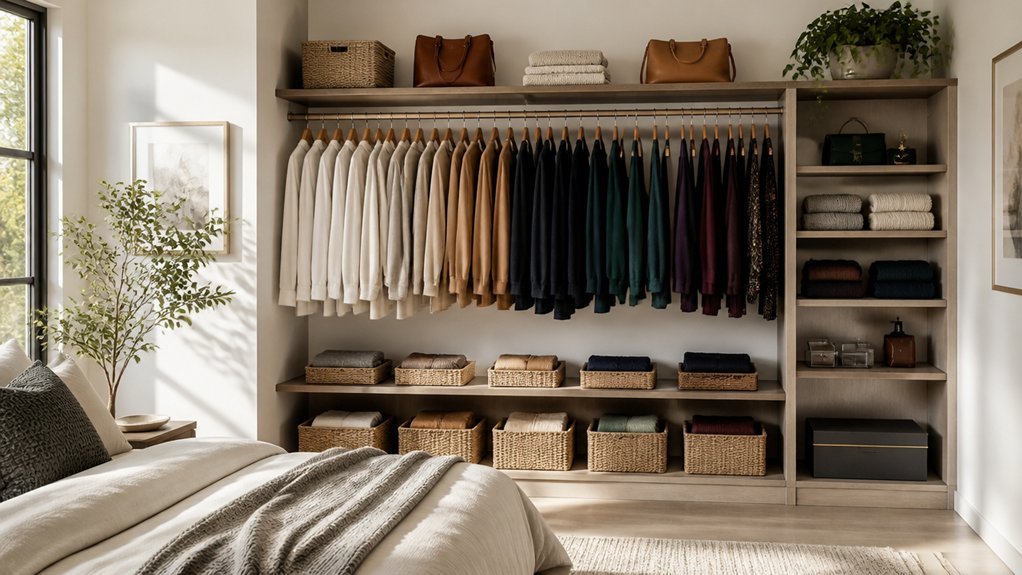
Bedroom clutter rarely starts with the room itself. More often, it begins with clothing that has nowhere logical to go. People hang onto pieces that no longer fit, buy replacements without clearing the old, and lose track of what they actually own. The result is a space that feels chaotic no matter how often it’s tidied.
Breaking this pattern starts with honest inventory. Pull everything out and sort with clear criteria: keep, donate, repair, or discard. This alone reveals problem areas, perhaps too many shoes and not enough shelf space, or bulky sweaters crushing delicate items.
From there, choose storage that matches your actual habits. Hanging rods work for those who reach for dresses and shirts; bins and dividers suit folded staples like denim and knitwear.
The final piece matters most yet gets skipped constantly. Without a simple maintenance routine, even the best system collapses within weeks. Spend five minutes each evening returning items to their designated homes. Schedule seasonal reviews to prevent buildup.
Organization isn’t a one-time project; it’s a practice that keeps the bedroom peaceful and functional.
Assess Your Wardrobe and Identify Problem Areas

How often does someone stand before a full closet yet struggle to find something to wear? Assessment begins by examining current clothing inventory. People should identify specific problem areas: items that no longer fit, pieces worn repeatedly while others remain untouched, duplicate colors or styles, and garments unsuitable for their lifestyle.
Checking condition matters too, torn seams, missing buttons, or faded fabrics indicate removal candidates. Creating mental or written categories helps organize findings: keep, donate, sell, or discard. This evaluation process reveals actual wardrobe composition versus perceived collection, establishing a clear foundation for subsequent organization decisions and purchases.
Declutter Your Wardrobe: Keep, Donate, Discard

Once assessment reveals the wardrobe’s contents, the next step involves making decisions about each item. Individuals should evaluate clothing based on fit, condition, and actual usage patterns. Items that no longer fit, contain stains or damage, or haven’t been worn in one year warrant removal.
Keepers include versatile pieces, well-fitting basics, and items worn regularly. Donation suits gently used clothing in good condition. Discarding applies to unwearable items.
This systematic categorization reduces clutter, improves accessibility, and creates space for intentional purchases that align with personal style and lifestyle needs.
Choose Storage Solutions That Fit Your Space
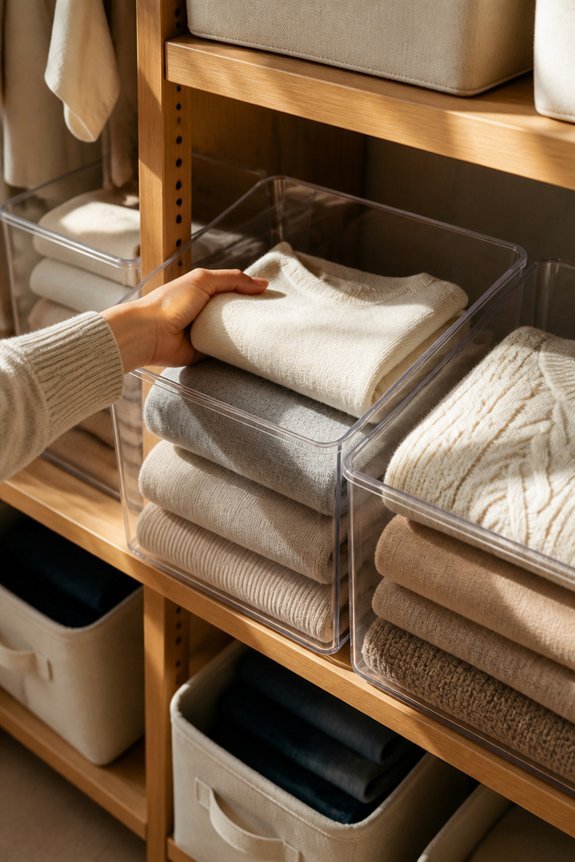
After removing unwanted items, the decluttered wardrobe requires appropriate storage to maintain organization and accessibility. Storage solutions depend on available space, budget, and clothing quantity.
Hanging rods work well for dresses, blouses, and jackets. Shelves accommodate folded items like sweaters and pants. Drawers store undergarments, socks, and smaller pieces. Clear plastic bins help organize seasonal clothing or accessories.
Wall-mounted organizers maximize vertical space in compact rooms. Over-door shoe racks and hooks provide additional storage without floor space consumption. Selecting the right combination of these options prevents overcrowding, reduces wrinkles, and simplifies finding desired items daily.
Organize by Category and Color
Grouping clothing by both category and color creates a system that simplifies daily selection and maintains visual order. Organize items into sections for shirts, pants, skirts, dresses, and jackets, then arrange each category by color progression.
This method, ranging from light to dark hues, helps locate specific pieces quickly. For example, place white and cream tops together, followed by pastels, then jewel tones. Similarly, arrange pants from light denim through dark navy and black.
Accessories like scarves and belts benefit from this organization too. The resulting visual arrangement reduces decision fatigue during morning routines and keeps the wardrobe intentionally structured.
Choose Your Wardrobe Strategy: Capsule, Seasonal, or Maximalist
Since different lifestyles require different approaches to clothing, individuals benefit from selecting a wardrobe strategy that aligns with their needs, budget, and living situation.
A capsule wardrobe contains versatile basics like jeans, neutral tops, and blazers that mix easily together. Seasonal strategies involve rotating clothes by weather, storing winter coats separately during summer months. Maximalist approaches embrace larger collections, featuring diverse styles and colors for varied occasions.
Each method offers distinct advantages: capsule wardrobes save space and money, seasonal organization maximizes bedroom storage, and maximalist collections provide extensive options. The choice depends on personal preferences, available closet space, and lifestyle demands.
Prevent Clutter From Returning: Your Monthly Checklist
Once a wardrobe strategy is selected and implemented, maintaining that system requires regular attention to prevent unwanted items from accumulating again. A monthly checklist helps identify problems early.
Review hanging items for pieces worn zero times, check drawers for forgotten garments, and assess seasonal clothing storage. Remove damaged items like torn seams or broken zippers. Evaluate whether new purchases align with the chosen strategy.
Verify that donation bags were actually removed from the bedroom. Reorganize sections that shifted during daily use. This routine, completed once monthly, takes approximately thirty minutes and preserves the organized system‘s effectiveness.
Refresh Your System Seasonally
Beyond monthly maintenance, wardrobe systems benefit from deeper refreshes aligned with seasonal changes. As weather shifts, individuals should assess clothing functionality, removing items that no longer serve current conditions. Rotating seasonal pieces: winter coats, summer dresses, lightweight layers, prevents overcrowding and improves accessibility.
This process involves evaluating what worked during the previous season, identifying gaps, and donating unused items. Reorganizing storage areas, switching out hangers, and repositioning clothing by season guarantees the system remains effective. Seasonal refreshes typically occur four times yearly, coinciding with weather changes. This practice maintains system efficiency, reduces decision fatigue, and keeps wardrobes aligned with actual lifestyle needs and environmental conditions.
Frequently Asked Questions
How Often Should I Wash and Rotate Clothes to Maintain Wardrobe Organization?
One should wash clothes after two to three wears, depending on fabric and activity level. Rotating garments seasonally prevents wear patterns and maintains organization. Regular laundering extends clothing lifespan while keeping the wardrobe fresh and functional.
What’s the Best Way to Store Delicate Fabrics Like Silk and Cashmere Safely?
One must treat silk and cashmere like priceless treasures locked away in a vault. Fold them meticulously, store in breathable cotton bags away from sunlight, and maintain cool, dry conditions. Cedar blocks prevent moths; humidity monitors guarantee ideal preservation of these luxurious investments.
Should I Organize My Wardrobe by Outfit Combinations or Individual Clothing Items?
Organizing by outfit combinations proves more practical for daily dressing, as it streamlines morning decisions and reduces clutter. However, grouping items by type—shirts, trousers, dresses—works better for those preferring flexibility and maximizing wardrobe versatility throughout the week.
How Can I Prevent Wrinkles and Damage When Storing Off-Season Clothing Long-Term?
One should store off-season clothing in breathable garment bags, fold items carefully to minimize creases, and maintain consistent temperature and humidity levels. Cedar blocks or lavender sachets deter pests naturally while allowing proper air circulation throughout storage containers.
What Organizing Tools and Hangers Work Best for Maximizing Closet Space Efficiency?
Slim velvet hangers reduce bulk while preventing slipping. Vertical dividers organize folded items effectively. Tiered hanging organizers utilize overhead space. Shelf dividers prevent toppling. Drawer organizers compartmentalize accessories. These tools collectively optimize storage capacity considerably.
Conclusion
Organizing a wardrobe requires evaluating inventory, decluttering ruthlessly, and selecting appropriate storage. By categorizing clothes and choosing a strategy—capsule, seasonal, or maximalist—individuals create functional systems. Maintaining this organization through monthly checklists and seasonal refreshes prevents chaos from returning a million times over. Consistency guarantees the bedroom remains clutter-free, clothes stay accessible, and the wardrobe serves its intended purpose effectively.