
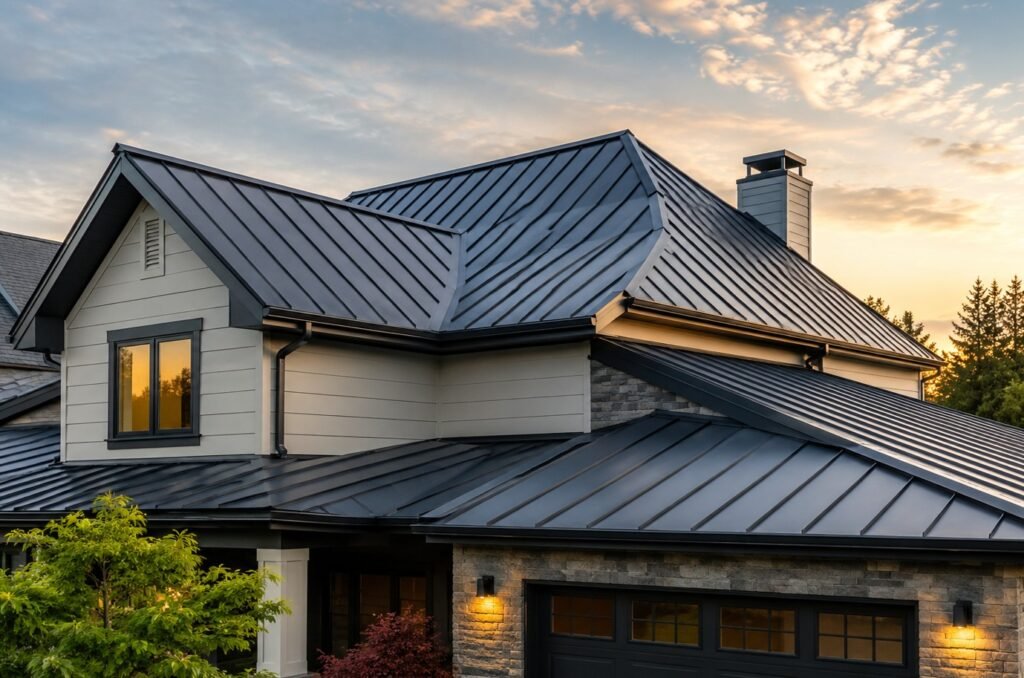
A roof does far more than keep rain out. It influences indoor temperature, energy use, maintenance needs, exterior appearance, and even how confident a future buyer may feel about a property. That makes the choice of roofing material an important part of creating a comfortable and valuable home.
For homeowners planning a renovation or replacing an ageing roof, metal roofing has become an increasingly practical option. Modern metal roofs combine long service life with attractive finishes, weather resistance, and opportunities for improved energy performance.
The benefits are not limited to what you see from the street. The right roofing system can also influence how comfortable bedrooms and other living spaces feel throughout the year.
Better Temperature Control During Warm Weather
Rooms on the upper floor of a home can become uncomfortable when the roof absorbs large amounts of solar heat. Bedrooms are particularly noticeable because excessive heat can make the space uncomfortable in the evening, even after outdoor temperatures begin to fall.
Metal roofing can help address this when the appropriate finish is selected. Reflective or “cool roof” coatings are designed to reflect more solar energy and release absorbed heat more effectively. ENERGY STAR explains that roofs with high solar reflectance and thermal emittance can remain cooler and reduce the amount of heat transferred into a building.
This does not mean every metal roof automatically delivers the same energy performance. Colour, coating, insulation, ventilation, local climate, and the construction of the roof assembly all matter.
In a warm, sunny location, however, choosing a metal roof with suitable reflective properties can reduce unwanted heat gain. That can contribute to more comfortable upstairs rooms and reduce the demand placed on air-conditioning systems.
A More Comfortable Bedroom Environment
When people think about improving bedroom comfort, they usually start inside the room. New wardrobes, better curtains, comfortable bedding, improved lighting, and efficient heating or cooling can all make a difference.
The structure surrounding the bedroom matters too.
A bedroom directly beneath a poorly performing roof can experience greater temperature fluctuations. Improving the roof as part of a wider renovation can therefore complement interior improvements.
The roof itself should not be viewed as a substitute for proper insulation. Instead, metal roofing, insulation, ventilation, windows, and heating or cooling should work as one system.
When these elements are considered together, it becomes easier to maintain a pleasant indoor environment without relying excessively on heating or air conditioning.
Metal Roofing Can Support Better Energy Efficiency
Energy efficiency has become an important consideration when homeowners decide where to invest their renovation budget.
The U.S. Department of Energy notes that cool roofs can reduce heat transfer into buildings, with the greatest cooling benefits generally occurring in hot, sunny climates. The exact savings depend on factors including climate, existing insulation, roof type, and the efficiency of the building’s heating and cooling equipment.
Metal roofs are particularly suitable for reflective finishes. According to the Metal Roofing Alliance, painted or granular-coated metal roofing systems can reflect solar energy and release absorbed heat, helping reduce cooling requirements.
For the homeowner, the practical benefit can extend beyond the energy bill. Reducing unnecessary heat entering through the roof may help create a house that feels more consistently comfortable during periods of hot weather.
The important point is to choose the roofing specification carefully rather than assuming that any metal panel will provide maximum efficiency.
Long Service Life Adds Long-Term Appeal
Roof replacement is a major home improvement project, so homeowners understandably want the finished roof to last.
One of the strongest advantages associated with quality metal roofing is longevity. The Metal Roofing Alliance states that a properly installed quality metal roof can last more than 50 years, although actual service life depends on the material, environment, installation quality, coatings, and maintenance.
A longer-lasting roof can reduce the likelihood of needing another full replacement in the near future.
This can be especially attractive when homeowners are making improvements they expect to enjoy for decades. Rather than thinking only about the initial installation price, it makes sense to consider the roof’s expected service life and ongoing maintenance requirements.
The same consideration can matter to future buyers. A relatively new, professionally installed roof with a long expected lifespan may be more reassuring than an older roof that could require substantial work shortly after purchase.
Weather Protection Helps Protect the Rest of the Home
Many of the most expensive problems inside a property begin with failures outside it.
Water entering through damaged roofing can eventually affect insulation, ceilings, walls, electrical systems, built-in storage, flooring, and decorative finishes. Preventing water intrusion is therefore about protecting much more than the roof itself.
Quality metal roofing systems are designed to withstand demanding weather conditions when correctly specified and installed. Metal roofs can offer resistance to problems such as cracking, shrinking, and erosion, while properly engineered systems can also perform well under high winds, hail, snow, and other challenging conditions.
Installation quality remains critical. FEMA guidance for high-wind areas, for example, emphasises appropriate testing, design pressures, and installation practices for metal roof systems.
Homeowners should therefore pay as much attention to the roofing contractor and system specification as they do to the material itself.
Lower Maintenance Can Make Homeownership Easier
Home improvements have value when they make everyday life easier as well as making a property look better.
All roofs require inspection and appropriate maintenance, but metal roofing generally has relatively modest maintenance requirements when properly installed.
Routine care may involve checking for accumulated debris, inspecting gutters and drainage, monitoring sealants and flashing, and looking for damage after severe weather. Particular requirements vary according to the roofing system and local environment.
The Metal Roofing Alliance notes that quality metal roofing requires relatively little upkeep over its service life compared with roofing systems that may need more frequent repair or replacement.
For homeowners planning a low-maintenance property, that longevity can fit well alongside durable windows, built-in wardrobes, hard-wearing flooring, and other improvements intended to reduce future renovation work.
Modern Metal Roofs Can Improve Curb Appeal
Mention a metal roof and some people still picture plain corrugated sheets on an agricultural or industrial building. Residential metal roofing offers considerably more design flexibility.
Modern systems are available in numerous colours, profiles, textures, and finishes. Options include standing seam panels as well as products designed to resemble shingles, tiles, or shakes.
This variety means homeowners can choose a roof that complements the architecture rather than dominates it.
A contemporary property may suit clean standing seams in a restrained neutral shade. A more traditional house might benefit from a metal system designed to provide the appearance of a familiar roofing material while retaining many of metal’s practical characteristics.
Because the roof represents a significant portion of a home’s visible exterior, getting its colour and profile right can transform the overall appearance.
Curb Appeal Can Influence Perceived Property Value
Property value is not determined by a single renovation. Location, size, condition, local demand, layout, energy performance, and countless other factors contribute to what buyers are willing to pay.
Still, presentation matters.
A worn, stained, damaged, or visibly ageing roof can create immediate concern. Buyers may begin calculating replacement costs before they have even entered the house.
A well-maintained metal roof can create a different impression. It can communicate that substantial work has already been completed and that the property has been maintained with long-term durability in mind.
The Metal Roofing Alliance reports that homeowners may recover a meaningful portion of a metal roof investment through resale value, although returns vary substantially by property and region.
For that reason, metal roofing should not be viewed as a guaranteed way to increase a home’s selling price by a particular amount. Its value is better considered as a combination of durability, appearance, reduced replacement risk, energy performance, and buyer confidence.
It Can Complement Other Home Improvements
Home renovation tends to work best when improvements are considered together.
Imagine updating a main bedroom with fitted wardrobes, better lighting, new flooring, improved insulation, and modern windows while ignoring a roof that is already approaching the end of its useful life. The interior may look beautiful, but an unresolved roofing problem could eventually put those improvements at risk.
A more coordinated renovation considers the building from the outside in.
The roof protects the structure. Insulation and ventilation help control the internal environment. Windows influence light, heat gain, and heat loss. Interior storage improves organisation and usable space. Decoration then creates the desired character.
When these upgrades support one another, homeowners can achieve something more valuable than a collection of individual improvements: a house that functions better as a whole.
What About Rain Noise?
Noise is a common concern for homeowners considering metal roofing, particularly when bedrooms are located immediately beneath the roof.
The sound of rain on an exposed sheet of metal can certainly be noticeable. A residential metal roof, however, is generally installed as part of a complete roof assembly rather than as a bare sheet directly above the living space.
Roof decking, underlayment, insulation, attic space, ceilings, and other construction layers can all influence how much exterior sound reaches a bedroom.
If noise is an important consideration, discuss the complete roof build-up with the installer rather than judging acoustic performance solely by the outer roofing material.
This is particularly worthwhile when converting a loft into a bedroom or renovating rooms directly below the roof.
Metal Roofing Can Be a More Sustainable Long-Term Choice
Homeowners increasingly consider what happens to construction materials both during and after their useful life.
Metal offers advantages here because it is recyclable. The Metal Roofing Alliance states that metal roofing can be recycled at the end of its service life and that many products also contain recycled material.
Longevity contributes to the sustainability argument as well.
A roof that remains functional for several decades can reduce the frequency of replacement and therefore the amount of material, transportation, labour, and waste associated with repeated roofing projects.
Of course, the environmental impact varies according to the metal, manufacturing process, coating, transportation distance, installation, and eventual recycling route. Sustainability should therefore be considered across the roof’s entire lifecycle.
Metal Roofing Can Work Well With Solar Panels
Homeowners planning long-term energy improvements may also be considering solar panels.
Metal roofing can provide a useful platform for photovoltaic systems. Certain standing seam metal roofs allow solar mounting systems to attach to the seams, potentially reducing the need for penetrations through the roofing itself. The long service life of quality metal roofing can also be beneficial because homeowners are less likely to face an early roof replacement underneath a relatively new solar installation.
If solar panels are part of your future plans, discuss them before choosing the roofing profile. Roof orientation, shading, structural capacity, panel attachment methods, wiring routes, and access requirements should all be considered.
Planning the two systems together can prevent unnecessary complications later.
Choosing the Right Metal Roof Matters
The term metal roofing covers many different products, and their performance is not identical.
Steel and aluminium are common choices, while other metals are available for specialised or premium applications. Coating systems, panel thickness, fastening methods, profiles, colours, warranties, and corrosion resistance can also vary considerably.
Before choosing a product, consider the home’s architecture, local climate, proximity to the coast, roof pitch, insulation, ventilation, desired appearance, budget, and expected ownership period.
For energy performance, pay particular attention to tested solar reflectance and thermal emittance rather than choosing based on colour alone. ENERGY STAR notes that modern material and coating technologies can provide strong reflective performance in colours beyond traditional white or very light finishes.
Most importantly, use a contractor experienced with the specific roofing system being installed.
Is Metal Roofing Worth the Higher Initial Cost?
Cost is one of the main reasons homeowners hesitate.
A quality metal roof can have a higher upfront price than some conventional roofing options. Looking only at the installation quote, therefore, does not always provide a complete comparison.
A more useful calculation considers the total cost of ownership.
Think about how long each roofing option is expected to last, how much maintenance it may require, whether it could improve energy performance, and how likely you are to replace it during your ownership of the property.
If you expect to remain in the house for many years, longevity may carry more weight. If you plan to sell sooner, appearance, condition, warranty transferability, and local buyer preferences may become more important.
There is no universal answer. The right roofing choice depends on the house, climate, budget, and homeowner’s priorities.
Final Thoughts
The roof may not receive as much attention as a newly designed kitchen, a beautifully organised bedroom, or custom fitted wardrobes, but it plays a fundamental role in how comfortable and protected those spaces remain.
Well-specified metal roofing can contribute to better summer comfort, energy efficiency, weather protection, lower long-term maintenance, and attractive exterior design. Its potential lifespan can also make it appealing to homeowners who want to invest in improvements that will continue delivering value for decades.
It is equally important to recognise that the material alone does not determine the result. Insulation, ventilation, coatings, roof design, climate, and installation quality all influence performance.
When those elements are carefully considered together, a metal roof becomes more than an exterior covering. It becomes part of a broader strategy for creating a comfortable, durable, attractive, and potentially more valuable home.