
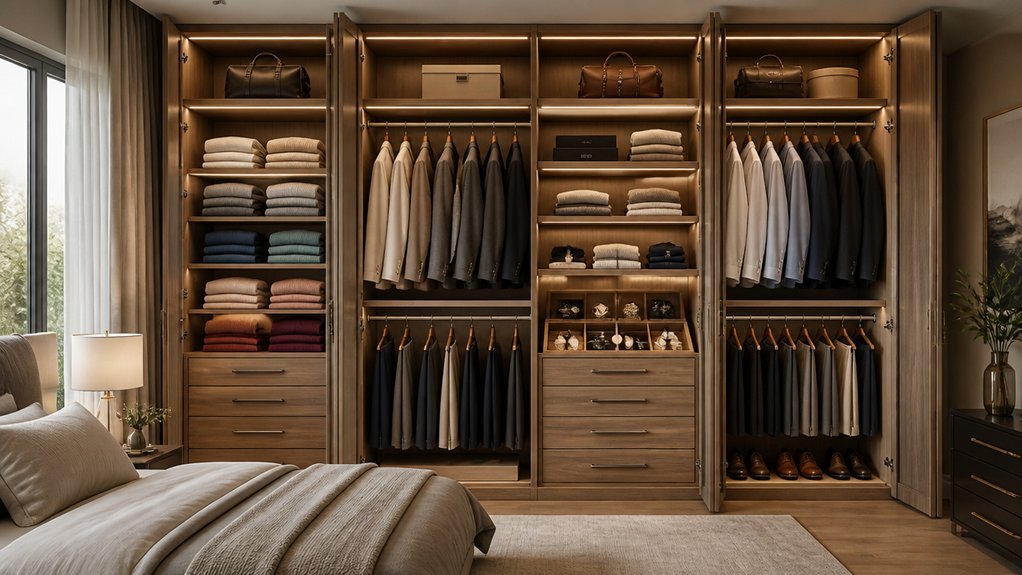
Creating a truly functional fitted wardrobe starts long before any installation begins. Taking precise measurements of your space, cataloging what you actually own, and deciding how you want to group your belongings sets the groundwork for everything that follows. Without this preparation, even the most expensive systems fall short.
Practical features make all the difference in daily use. Double hanging rods instantly double your vertical storage for shirts and trousers, while shelf dividers keep stacks of sweaters or linens from toppling into disarray. Small drawer organizers transform jumbled accessories into neatly compartmentalized collections.
Good lighting and a well-placed mirror turn routine dressing into something genuinely pleasant rather than frustrating.
The real test comes months later. Many wardrobes look immaculate initially, only to slide back into cluttered chaos when life gets busy. The systems that endure are those aligned with your actual habits, not aspirational ones.
Finding that match between design and lifestyle determines whether your investment pays off for years or becomes another forgotten resolution.
Measure Your Space and Inventory Your Clothes
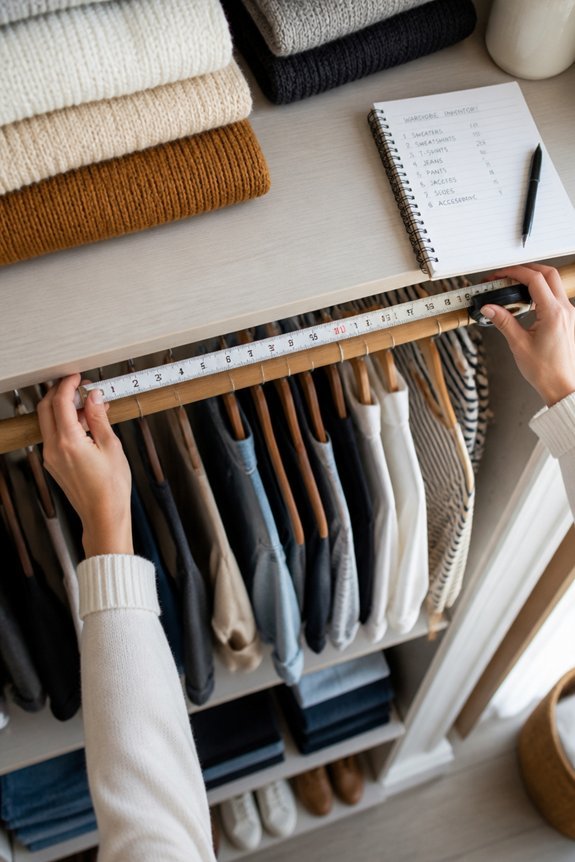
Before selecting fitted wardrobe components, one must measure the available space and document existing clothing items. Measuring height, width, and depth of the closet area determines what storage solutions fit properly. Recording current clothing inventory, including shirts, pants, dresses, and accessories, reveals what items exist and their quantities. Creating a simple list or spreadsheet helps track pieces by category and condition.
Noting damaged items, duplicates, and rarely worn clothes identifies what requires replacement or removal. This foundational step prevents purchasing redundant storage units and guarantees selected fitted wardrobes match actual space constraints and clothing volume. Accurate measurements and inventory documentation establish the baseline for effective organization planning.
Maximize Vertical Space in Your Fitted Wardrobe
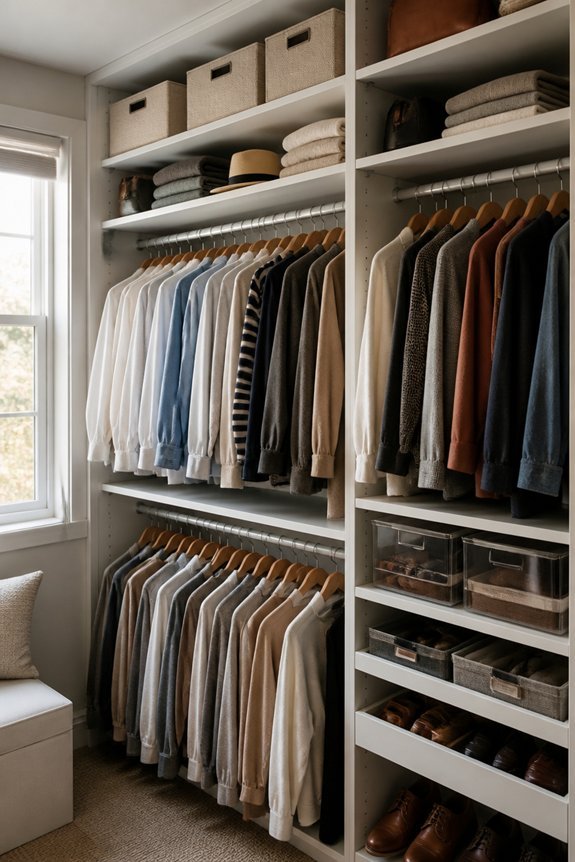
How can a fitted wardrobe store more clothing without expanding the closet’s footprint? Vertical organization maximizes available space efficiently.
Installing double hanging rods, one above the other, doubles clothing capacity in standard sections. Shelf dividers, stacked horizontally, create multiple layers for folded items like sweaters and jeans. Tall shelving units utilize wall height fully.
Over-the-door organizers hold accessories, scarves, and belts. Hanging shoe racks and cascading hangers increase storage density. Hooks mounted inside doors accommodate bags and lightweight garments.
These vertical solutions transform underutilized wall space into functional storage areas, keeping wardrobes organized and accessible while maintaining compact dimensions.
Choose Hanging Rails and Rod Systems Based on Your Clothes
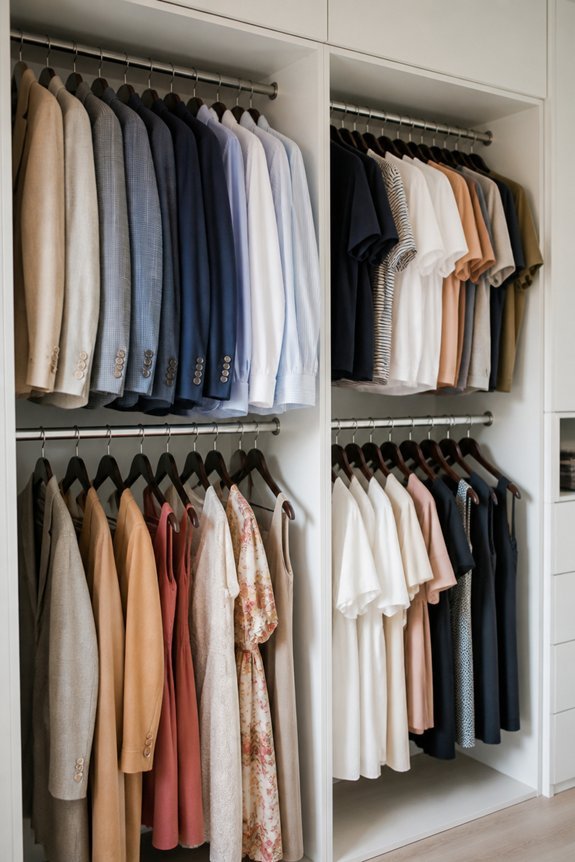
Maximizing vertical space sets the foundation for an organized wardrobe, yet the hardware itself determines how effectively clothing hangs and remains accessible. Single rails suit lightweight garments like t-shirts and blouses, while double rails accommodate folded items, sweaters, and casual wear. Heavy coats and jackets require sturdy rods with adequate weight capacity.
Adjustable hanging systems offer flexibility for changing storage needs throughout seasons. Pull-out rails provide easier access to garments positioned deeper within the wardrobe. Selecting appropriate hardware based on fabric weight, garment length, and frequency of use guarantees durability and functionality, preventing sagging and damage while maintaining organized storage.
Organize Drawers and Shelves by Category
Grouping similar items together creates a logical storage system that simplifies getting dressed and finding specific pieces.
Dedicate separate drawers or shelves to categories like socks, underwear, accessories, and folded sweaters. This method reduces time spent searching through cluttered spaces. Organize shelves by garment type: casual wear on one shelf, formal items on another, activewear in a third location.
Use dividers or small boxes to prevent items from shifting. Maintain consistent groupings to establish habits. Clear labeling helps household members locate items quickly.
Regular maintenance guarantees the system remains functional over time.
Use Dividers, Hooks, and Boxes to Multiply Storage
Strategic placement of dividers, hooks, and boxes transforms fitted wardrobes into highly efficient storage systems that accommodate more items within the same physical space. Drawer dividers separate socks, underwear, and accessories into distinct sections, preventing clutter and enabling quick location of needed items. Hooks mounted on interior sides hold belts, scarves, and bags without consuming shelf space.
Stackable boxes organize seasonal clothing, shoes, and folded garments vertically. Pull-out baskets store lightweight items like sweaters and activewear. These organizational tools maximize capacity while maintaining accessibility and visibility, allowing users to store approximately thirty percent more items than traditional storage methods alone.
Add Lighting and Mirrors So You Can See Everything
While dividers, hooks, and boxes create order within fitted wardrobes, poor visibility undermines even the best organizational systems. Adding adequate lighting and mirrors transforms functionality by enabling users to locate items quickly and assess outfit combinations accurately.
LED strip lights installed along shelves or the wardrobe ceiling provide bright, even illumination without excess heat. Mirrors positioned on doors or interior walls allow visual inspection of clothing from multiple angles.
These additions reduce fumbling through dark spaces, prevent duplicate purchases of unseen items, and streamline the daily selection process. Strategic placement of both elements maximizes accessibility and clarity throughout the wardrobe interior.
Design a Fitted Wardrobe Interior You’ll Actually Use Long-Term
The most organized closet fails if its layout contradicts how people actually dress. Effective wardrobe design matches daily habits and lifestyle needs. Consider work requirements, climate, and social activities when planning sections.
Place frequently worn items at eye level, seasonal pieces higher or lower. Group clothing by function: work clothes, casual wear, formal attire. Include adjustable shelving for flexibility as needs change. Store accessories near outfits they complement.
Review the layout quarterly, making adjustments based on actual usage patterns. A wardrobe that aligns with genuine routines remains organized long-term.
Frequently Asked Questions
What Is the Average Cost of Installing a Custom Fitted Wardrobe Interior?
Custom fitted wardrobe interiors typically range from $2,000 to $10,000, depending on size, materials, and complexity. Budget options start around $1,500, while luxury installations exceed $15,000. Costs vary based on professional design services and premium finishes selected.
How Often Should I Reorganize and Refresh My Fitted Wardrobe Layout?
Like seasons shifting the landscape, one should refresh wardrobe layouts seasonally—approximately every three to four months. This rhythm prevents stagnation, accommodates changing needs, and guarantees the space evolves alongside one’s lifestyle and fashion preferences.
Can Fitted Wardrobes Accommodate Seasonal Clothing Rotation Effectively?
Yes, fitted wardrobes effectively accommodate seasonal rotation. They feature adjustable shelving, pull-out drawers, and removable rails that allow users to systematically swap winter and summer clothing. Proper organization maximizes accessibility while maintaining neat, functional storage year-round.
What Materials Are Most Durable for Fitted Wardrobe Construction?
High-quality plywood and MDF provide excellent durability for fitted wardrobes. Solid wood offers superior longevity, while metal frames guarantee structural stability. Hardware components should feature stainless steel or powder-coated finishes to resist corrosion and wear effectively.
How Do I Prevent Moth Damage and Protect Clothes in Fitted Wardrobes?
Like a fortress requires constant vigilance, wardrobes demand proactive defense. One protects garments through cedar blocks, mothballs, and sealed storage containers. Regular vacuuming eliminates larvae. Maintaining cool, dry conditions and inspecting clothing seasonally prevents infestations effectively.
Conclusion
A well-organized fitted wardrobe, like a well-maintained library, requires ongoing attention and intentional design. Implementing measurement-based layouts, categorized storage, and proper lighting creates functional systems that persist over time. Double hanging rods, drawer dividers, and inventory documentation prevent chaos from returning. Success depends on matching organizational methods to individual clothing habits, ensuring the wardrobe adapts as lifestyle needs evolve.