
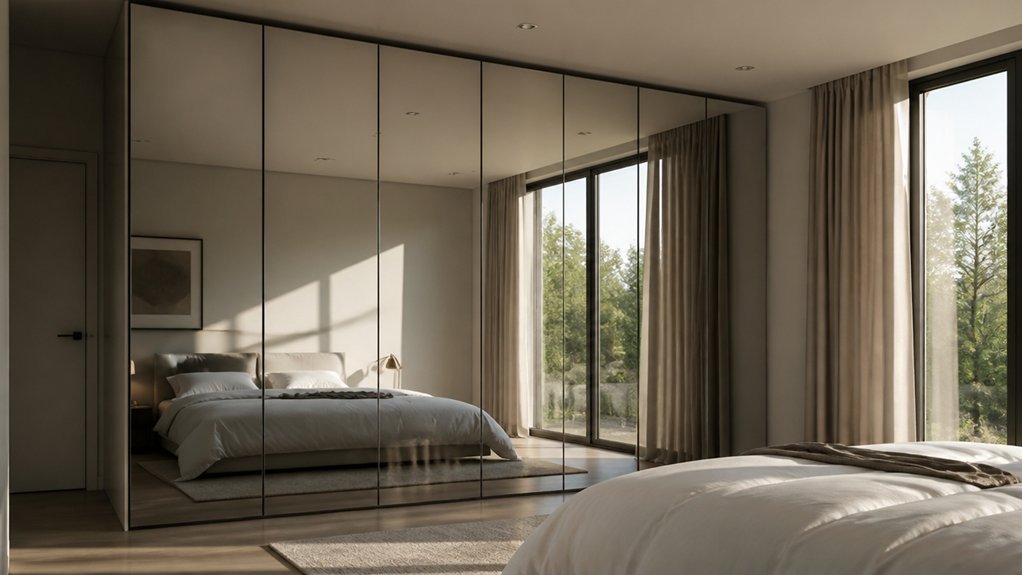
Mirrored wardrobes do more than store clothes—they quietly reshape how a bedroom feels. By catching and scattering light across walls and ceilings, they trick the eye into perceiving depth where square footage is limited. It’s a simple illusion, but an effective one when executed thoughtfully.
Where you place these reflective surfaces matters immensely. Positioning a mirrored wardrobe opposite a window floods the room with doubled daylight, while angling it toward a dark corner can brighten neglected spaces. Too many mirrors, however, or awkward placement near busy visual elements, disrupts rather than expands the room’s sense of calm.
Style selection completes the equation. Frameless full-length mirrors feel modern and seamless, while subtle framing adds warmth and architectural interest. Some homeowners prefer sliding doors that disappear into the design; others favor hinged panels that function as standalone dressing mirrors. Each choice carries implications for both aesthetics and daily use.
The interplay between mirror and light source ultimately determines success. Morning sun creates soft, welcoming glow; evening lamps cast dramatic, intimate reflections.
Testing placement at different times of day reveals whether your wardrobe amplifies the room’s best qualities—or merely adds glare.
Mirrored Wardrobe Styles for Every Bedroom Design
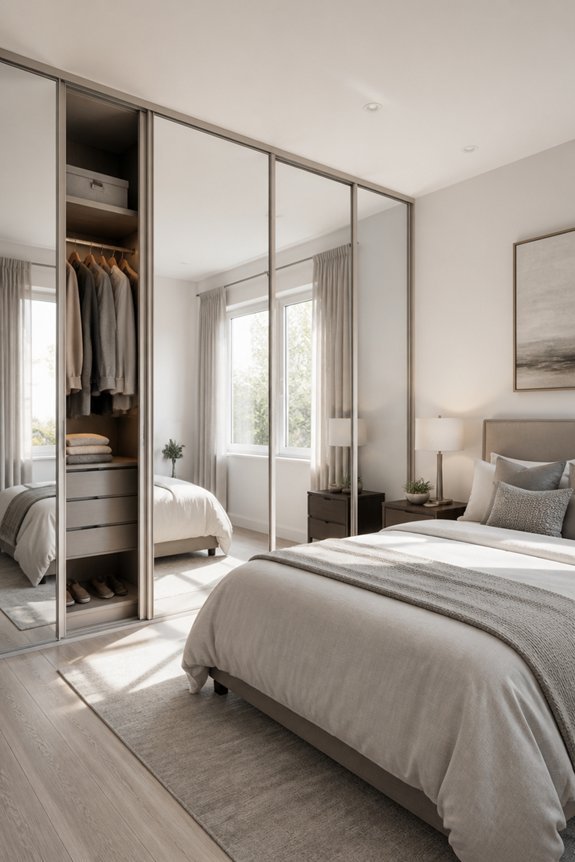
Mirrored wardrobes serve both functional and aesthetic purposes in bedrooms with different design schemes. Modern bedrooms benefit from sleek, frameless mirrored designs that complement minimalist interiors. Traditional spaces pair well with ornate wooden frames, brass accents, or carved details. Contemporary rooms suit handle-less mirrored panels with integrated lighting features.
Industrial bedrooms work with metal-framed versions, while bohemian spaces embrace rattan or wicker-bordered options. Scandinavian designs favor simple, light wood frames. Small bedrooms maximize space using full-length mirrored panels, reflecting natural light effectively. Larger rooms accommodate multiple mirrored sections or decorative patterns.
Color coordination matters: choose frames matching existing furniture finishes like walnut, oak, or white lacquer for cohesive design integration.
The Best Placement for Your Mirrored Wardrobe
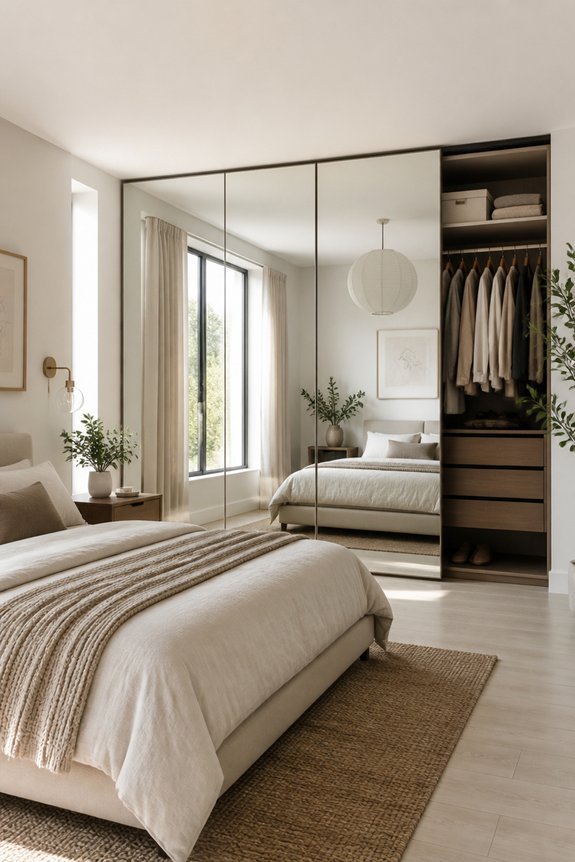
Where should a mirrored wardrobe be positioned for maximum utility and visual impact?
Placement depends on room layout, natural light, and daily routines. Positioning the wardrobe opposite a window reflects daylight, brightening the space and enhancing the enlarging effect. Placing it perpendicular to the bed creates visual depth without direct reflection during sleep.
Corner placement maximizes floor space while maintaining accessibility. Avoid positioning directly opposite another mirror, which creates confusing reflections. Consider traffic patterns: the wardrobe should not obstruct doorways or movement paths.
Wall-mounted options work well in smaller bedrooms, freeing valuable floor area. Height matters too. Extending mirrors from floor to ceiling amplifies the spaciousness effect considerably.
Why Mirrors Expand Small Bedrooms (The Science)
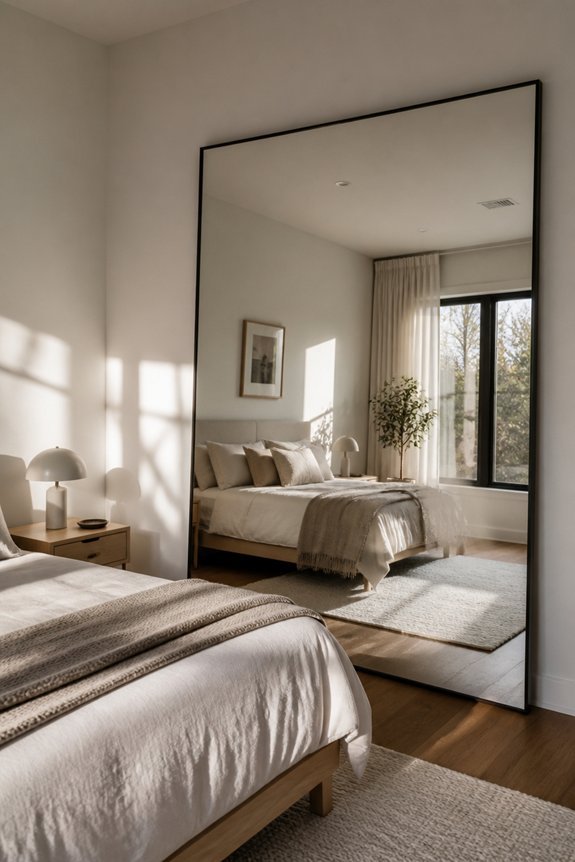
Light reflection functions as the primary mechanism behind the space-expanding illusion created by mirrored wardrobes. Mirrors bounce light around rooms, creating depth perception where flat walls previously existed. When positioned opposite windows or light sources, mirrored surfaces redirect natural and artificial illumination throughout the space.
This doubled light distribution makes small bedrooms feel airier and more open. Additionally, mirrors visually duplicate furniture, accessories, and room features, tricking the eye into perceiving larger square footage. A mirrored wardrobe positioned strategically can effectively double the perceived depth of a bedroom.
The reflective surface bounces light continuously, eliminating dark corners and creating consistent brightness levels throughout compact spaces.
How Mirrored Wardrobes Amplify Natural Light
Three key factors determine how effectively mirrored wardrobes amplify natural light in bedrooms: window placement, mirror angle, and reflective surface quality.
Positioning a mirrored wardrobe opposite a window allows reflected light to bounce deeper into the room, brightening corners and reducing dark zones. The angle of mirror panels affects light distribution, slightly angled mirrors redirect sunlight more efficiently than flat, perpendicular surfaces. High-quality mirror coatings reflect approximately 90 percent of incoming light, while lower-grade surfaces lose significant brightness through absorption.
East-facing windows provide morning light suitable for mirrored wardrobes, while west-facing placements capture afternoon brightness. Strategic placement near natural light sources maximizes the amplification effect, creating noticeably brighter, more spacious-feeling bedrooms throughout daylight hours.
Installation Essentials: Getting It Right the First Time
How can one guarantee a mirrored wardrobe installation succeeds without costly mistakes or safety issues? Proper planning prevents problems. Measure walls, doorways, and ceiling heights before purchasing. Check wall construction, identifying studs and load-bearing capacity.
Use appropriate hardware: heavy-duty anchors for drywall, bolts for studs. Level mirrors carefully during installation to prevent tilting. Secure all components tightly, reducing wobbling and accidents. Consider hiring professionals for large or complex installations.
Inspect mirrors for defects before mounting. Allow adequate clearance from adjacent furniture and fixtures. Verify electrical outlets won’t interfere with placement. Document measurements and installation details for future reference.
Pairing Mirrored Wardrobes With Complementary Design Choices
Selecting surrounding elements that work well with mirrored wardrobes requires consideration of color, texture, and furniture style. Neutral wall colors, including soft whites, grays, and beiges, complement mirror surfaces without creating visual clutter. Matte finishes on adjacent furniture reduce glare and balance the reflective qualities of wardrobe doors.
Wood tones, metal accents, and upholstered pieces add depth and prevent spaces from feeling cold. Lighting fixtures should position away from mirrors to minimize harsh reflections. Area rugs, curtains, and bedding in complementary hues anchor the room’s design scheme. These layered elements create cohesive interiors where mirrored wardrobes enhance spatial perception while maintaining aesthetic balance and functionality.
Real Bedroom Transformations: Mirrored Wardrobes in Action
Mirrored wardrobes deliver measurable results when installed in actual bedrooms, moving beyond design theory into practical home improvement. Homeowners in compact spaces report increased perceived square footage after installation, with reflected light expanding visual boundaries. A 10-by-12-foot bedroom with a mirrored wardrobe spanning one wall demonstrates noticeable depth enhancement, particularly when positioned opposite windows.
The mirror’s reflective surface bounces natural daylight throughout the room, reducing reliance on artificial lighting. Installation placement matters considerably: corner positioning maximizes spatial illusion more effectively than wall-center placement. Real transformations show that mirrored wardrobes function simultaneously as storage and spatial expansion tools, addressing dual bedroom challenges simultaneously.
Frequently Asked Questions
How Much Does a Mirrored Wardrobe Cost Compared to Standard Wardrobes?
Mirrored wardrobes typically cost 20-40% more than standard wardrobes. Prices vary based on size, quality, and materials, ranging from $300-$2,000 for basic models to $5,000+ for premium options. The additional expense reflects the mirror’s manufacturing and installation complexity.
Are Mirrored Wardrobes Difficult to Clean and Maintain Regularly?
Keeping reflective surfaces “optically pristine” requires consistent attention. Mirrored wardrobes demand regular cleaning to maintain their clarity, as fingerprints and dust accumulate visibly. However, they’re not particularly challenging—standard glass cleaner and microfiber cloths suffice for routine maintenance.
Can Mirrored Wardrobes Be Customized to Fit Non-Standard Bedroom Dimensions?
Yes, mirrored wardrobes can be customized to accommodate non-standard bedroom dimensions. Manufacturers typically offer bespoke services that allow clients to specify exact measurements, ensuring proper fit regardless of unusual wall configurations or ceiling heights.
Do Mirrored Wardrobes Work Well in Bedrooms With Low Ceilings?
Ironically, while mirrored wardrobes excel at expanding spatial perception, low-ceilinged bedrooms present a genuine challenge. The reflective surfaces can amplify cramped feelings by bouncing light chaotically. Experts recommend horizontal mirror placements and avoiding floor-to-ceiling designs in such spaces.
What Warranty Options Are Available for Mirrored Wardrobe Purchases?
Manufacturers typically offer standard warranties ranging from one to five years, covering structural defects and mirror quality. Extended warranties are often available for additional fees, protecting against accidental damage and wear. Buyers should review specific terms before purchasing.
Conclusion
Mirrored wardrobes function as architectural anchors in bedroom design, transforming spatial perception through strategic placement and reflective surfaces. Positioning them opposite windows, in corners, or perpendicular to beds maximizes light amplification and visual depth. Whether selecting modern or ornate styles, these pieces serve dual purposes: practical storage and optical expansion. Careful installation and thoughtful pairing with complementary décor elements guarantee successful room enhancement without overwhelming the space.