
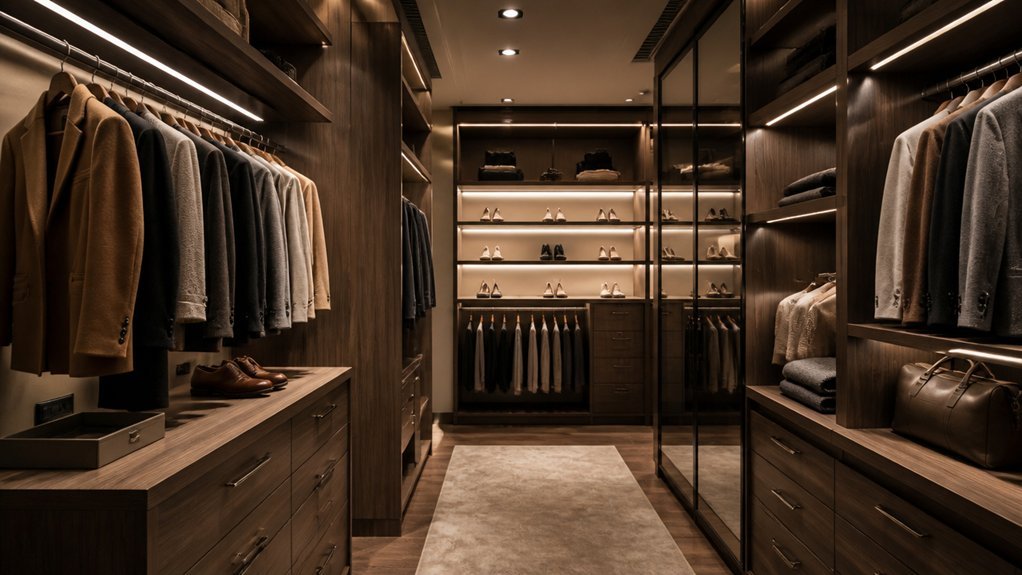
Built-in wardrobes deserve lighting that does more than simply brighten a dark corner. The right illumination transforms how fabrics read, how colors appear in morning light, and how effortlessly someone can pull together an outfit before coffee. Shadows disappear. Texture becomes visible. What once felt like a storage cave becomes a functional dressing space.
LED strips tucked along hanging rails cast an even glow across garments without harsh overhead glare. Motion-activated fixtures add convenience for hands-full mornings, while recessed downlights create drama and depth in larger walk-in designs. Each approach carries its own character, its own practical rhythm.
Placement matters as much as fixture choice. Layering light at multiple heights prevents the flat, washed-out look of single-source illumination. Consider toe-kick lighting for floating effects, interior cabinet glow for finding folded items, and subtle accent spots for displaying accessories.
These details separate polished built-ins from afterthought installations.
LED Strip Lights: The Foundation of Functional Wardrobe Lighting
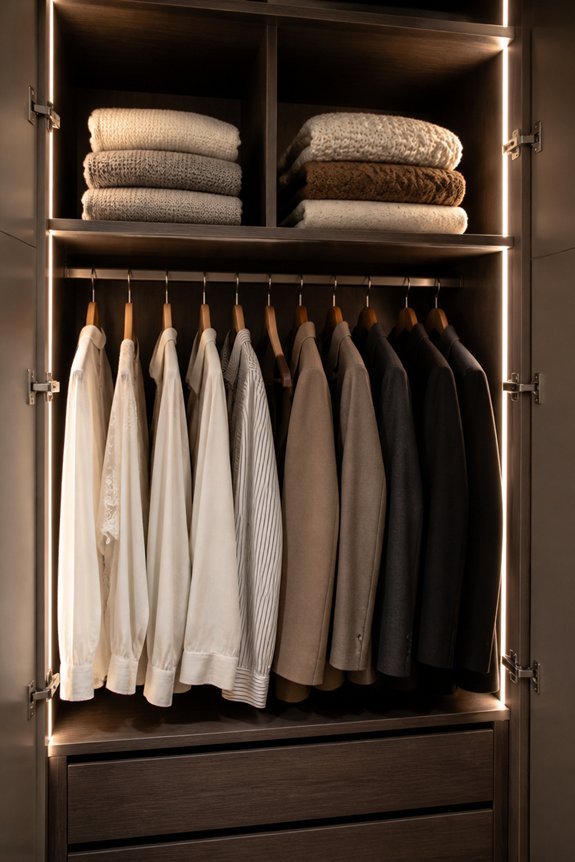
LED strip lights form the backbone of effective wardrobe illumination, providing consistent brightness that helps users identify colors, patterns, and fabric textures accurately. These lights install easily along shelves, rods, and cabinet edges, offering flexible placement options.
Common varieties include warm white, cool white, and RGB models, each serving different purposes. Warm white creates a comfortable atmosphere, while cool white enhances color accuracy. LED strips consume minimal energy and generate little heat, making them practical for enclosed spaces. Installation requires basic tools and adhesive backing, though professional mounting guarantees longevity. Many options feature dimming capabilities, allowing users to adjust brightness according to specific needs and preferences.
Where to Place Lights for Maximum Coverage and Impact
Where should wardrobe lights be positioned to achieve even illumination throughout a closet or cabinet space?
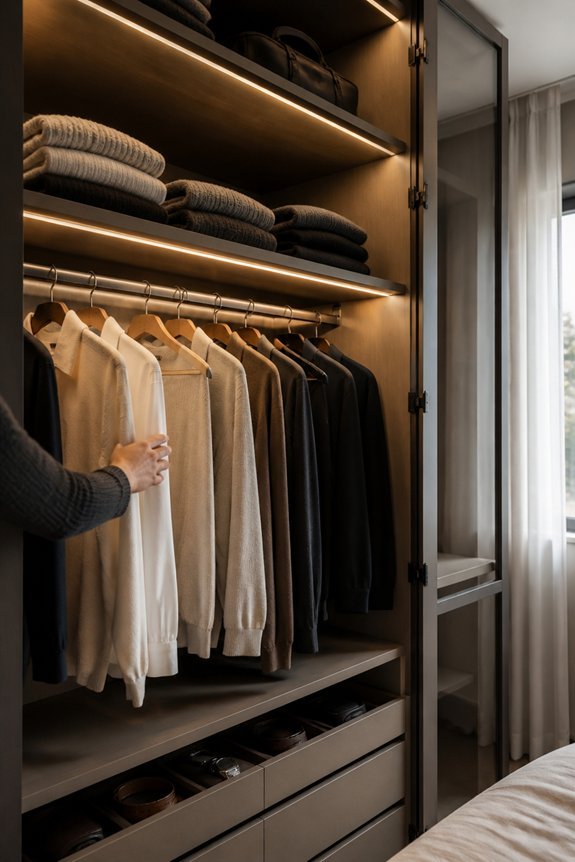
Optimal placement requires positioning lights along multiple areas. Install strips along the top perimeter, creating overhead coverage that reduces shadows on clothing below. Position additional lights on side walls, particularly targeting darker corners and recessed areas.
Consider placing lights inside shelving units, directing beams downward onto folded items. Mirror-adjacent placement enhances visibility near reflection surfaces. Lights positioned at eye level prevent glare while illuminating hanging garments effectively.
Spacing strips six to twelve inches apart guarantees consistent brightness. Strategic placement eliminates dark pockets, creating uniform visibility across the entire wardrobe space.
Motion-Activated Lights: Convenience and Energy Savings
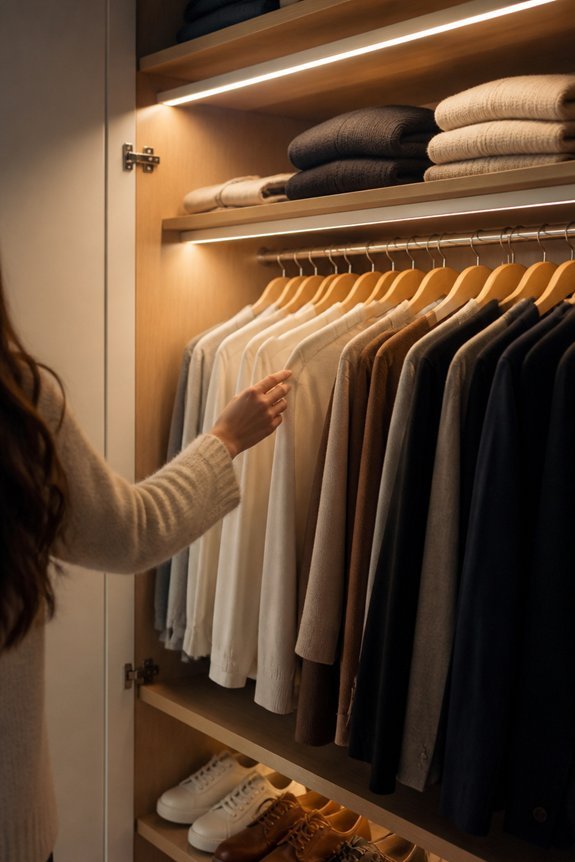
Motion sensors add automatic functionality to wardrobe lighting systems, complementing the strategic placement strategies discussed previously. These devices detect movement within the closet space, triggering lights to activate without manual switches.
Motion-activated lights reduce energy consumption considerably, since illumination only operates when needed. Installation typically involves positioning sensors near doorways or in central wardrobe locations. Common options include passive infrared sensors, microwave sensors, and dual-technology models combining both types.
Adjustable settings allow users to control sensitivity levels and duration timing. This technology proves particularly useful for frequently accessed wardrobes, minimizing electricity waste while providing convenient hands-free operation during dressing routines.
Spotlights and Track Lighting: Highlighting What Matters
While motion-activated systems provide general illumination throughout a wardrobe, spotlights and track lighting offer more focused beam patterns that direct attention to specific areas. Track lighting systems mount on rails, allowing adjustable fixtures to pivot toward desired zones. Spotlights concentrate light on featured clothing sections, jewelry displays, or accent walls.
LED spotlights consume minimal energy while producing bright, directional light. Track systems work well above hanging rods, shelving units, or display areas. Adjustable fixtures let users reposition beams as wardrobe layouts change. These lighting options create visual hierarchy, emphasizing premium pieces and improving outfit selection by illuminating clothing colors and textures accurately.
Pendant Fixtures and Statement Lights for Design Impact
Pendant fixtures and statement lights serve different purposes than focused spotlights and track systems, offering both functional illumination and aesthetic appeal to wardrobe spaces. These decorative options hang from ceilings, creating visual interest while providing ambient light.
Common styles include drum pendants, geometric designs, and vintage-inspired fixtures. Statement lights work well as focal points above seating areas or dressing tables. They contribute to overall room design while maintaining adequate brightness for clothing selection.
Pendant fixtures range from minimal to ornate, allowing customization based on wardrobe aesthetic preferences. Installation requires ceiling preparation and proper electrical connections for safety and functionality.
Layering Multiple Fixtures for Even Illumination and Depth
Combining multiple light sources throughout a wardrobe space creates balanced, even illumination while adding visual depth to the room. Layering involves using ambient overhead fixtures, task lighting near mirrors, and accent lights on shelving or clothing displays.
Recessed ceiling lights provide foundational brightness, pendant lights offer focused illumination, and LED strip lighting highlights specific garment areas. This approach prevents dark corners and shadows that obscure clothing choices.
Strategic placement of fixtures at varying heights and angles produces dimensional effects, making the wardrobe appear larger and more organized. Dimmers on layered fixtures allow adjustment for different times and moods throughout the day.
Installing Wardrobe Lights Yourself: Budget-Conscious Techniques
Understanding layered lighting principles allows homeowners to implement similar effects without professional installation costs. LED strip lights, adhesive-backed and plug-in varieties, offer affordable options for wardrobes. Battery-operated puck lights require no wiring, eliminating electrical work entirely.
Positioning lights along the top interior edge creates even illumination across hanging clothes. Motion-sensor fixtures activate automatically, reducing energy consumption. Clip lamps attach to existing shelving without permanent installation.
Under-shelf lighting kit bundles provide coordinated solutions at lower prices than individual components. Homeowners can combine these techniques strategically, using affordable fixtures to achieve professional-looking results while maintaining budget constraints and avoiding costly contractor fees.
Frequently Asked Questions
What Color Temperature of Light Is Best for Accurate Clothing Color Representation?
Neutral white light, typically between 4000-5000 Kelvin, provides the most accurate clothing color representation. This temperature range closely mimics natural daylight, allowing one to assess garment hues authentically without the distortions caused by warmer or cooler lighting conditions.
How Much Does Professional Wardrobe Lighting Installation Typically Cost?
Professional wardrobe lighting installation typically costs between $500 and $3,000, depending on the scope of work. Factors affecting pricing include the number of fixtures, installation complexity, electrical upgrades needed, and the quality of lighting components selected.
Which Lighting Option Works Best for Small or Compact Wardrobes?
Like a spotlight on a small stage, LED strip lights illuminate confined wardrobes most effectively. These slim fixtures hug shelves and rails, casting even illumination without consuming valuable space. Their low heat output and energy efficiency make them ideal for tight closet environments.
Can Wardrobe Lighting Increase Home Resale Value or Appeal?
Wardrobe lighting enhances home appeal by improving functionality and aesthetics. Potential buyers appreciate well-lit closets as they suggest quality construction and thoughtful design. This feature can positively influence perceived value and buyer satisfaction during property viewings.
What Safety Considerations Should I Know Before Installing Wardrobe Lights?
One must ascertain proper electrical grounding and use low-voltage systems to prevent fire hazards. Ventilation around fixtures prevents heat buildup. All wiring should comply with local building codes, and installation requires qualified electricians to guarantee safe operation.
Conclusion
Wardrobe lighting achieves both function and style through layered fixtures, strategic placement, and practical installation methods. LED strips provide consistent illumination, motion sensors offer convenience, and spotlights create visual emphasis. Combining overhead lights, accent fixtures, and battery-operated puck lights produces even coverage without shadows. Homeowners can implement these techniques independently, selecting components based on budget, space, and desired aesthetic results. Proper lighting transforms wardrobes into organized, visually appealing spaces.